Upon completing this weblog, a lot of research need to be done and thoeretical readings are adopted to support my analysis of media and publishing issues. Therefore, I learnt that moral and ethics should engaged while blogging. Lannon (2006, p. 468) opines that credibility and accuracy of information in a useful website is essential, therefore i make sure that all quotes, information, pictures from other sources are properly cited to avoid issues like copyright infrindgement and defamation.
According to Schriver (1997), text and images complement each other to convey effective message to the audience, therefore, the combination of images and words are added into my blog to enhance the engagement and understanding of an audience. Walsh (2006, p. 30-31) also opines that multimodality of a document helps strengthen the message intended to be conveyed across to the audience. Hence, there are multimodal modes in my blog. For instance, there are hyperlinks linking my blog to other sites.
All blogger should bear in mind to be sensitive to cultures and blog responsibly.
References
Schriver, KA 1997, 'Dynamics in Document Design: Creating Text For Readers', Wiley Computer Publisher, New York
Lannon, JM 2006, 'Technical Communication', 10th Edition, Pearson Education, USA
Walsh, M 2006, 'Textual Shifts: Examining The Reading Process With Print, Visual and Multimodal Text', Australian Journal of Language and Literacy, vol. 29, no. 1, p. 24-37
Saturday, June 13, 2009

Obama Uses Iphone to Win Supports

Back in November 2008, the ever tense election between Barrack Obama and President George. W Bush prompts US Democratic candidate, Obama to use iphone in order to gain supports and votes from his voters. In an article (BBC News 2008), there's a note about the software on Mr Obama's blog said: "This tool is designed to help you become more directly involved in our campaign to change the country."
The application also passes on up-to-date news from the campaign, video, photos and talking points to help convince friends to vote for the candidate. Obama camp has also been praised on how it has used technology to form a new move. Obama's move to set iphone into a political tool is effective because it encourage especially young adults to cast their votes by just a click on their phone since most of them are technology savvy, saving all their fuss yet do what they are suppose to.
In a recent blog entry (DailyContributor 2008) the campaign wrote: “With only 33 days left, it’s more important than ever to call your friends and family to make sure they are registered and voting for Barack.” The blog also said that it hoped the “Call Friends” feature would “create thousands of additional personal contacts” – that would then be turned into votes.
Kung et al. (2008, p.82) opines that when compared to traditional media, internet has improved accessibility and unbundling content, which impact to the increase user choice. This theory also demostrating the newest technology gadget, iphone. With an iphone in hand, eveythings get handy. You can know the answer by scrolling through the website of an Apple iphone.
References
Kung, L , Picard, RG & Towse, R 2008, The Internet and Mass Media, SAGE Publication Ltd, Los Angeles.
Maggie Shiels 2008, 'Technology, Obama Uses iphone to Win Support,' BBC News, access 13 June 2009,
<http://news.bbc.co.uk/2/hi/technology/7649753.stm>
Daily Contributor 2008, 'Obama Uses Iphone to Win Support', Daily Contributor, access on 13 June 2009,
<http://dailycontributor.com/obama-uses-iphone-to-win-support/227/>
Wednesday, June 10, 2009
Facebook New Layout Fetch Protest From Users

Apparently, the new facebook layout fetched protest due to users' unfamiliarity with the new layout. Protest groups have sprung up, such as " I Hate the New Facebook", "Petition Against the "New Facebook" and "1,000,000 Against the New Facebook Layout!" Suzanne Carbone, an active facebook user claims that, "With the old Facebook, we knew where everything was. It was our reliable, trusty confidant. Comfortable and safe." (The Age 2008)

*The Old Facebook Layout (Source: Thekmiecs.com 2008)

*The Old Facebook Layout (Source: Thekmiecs.com 2008)

Obviously Mark Zurkerberg, the founder of facebook.com did not see this coming. Why a simple change on facebook layout could lead to so many dissatisfaction from users? Let's refer back to issues in publishing and design theory, Reep (2006, p. 134) opines that, 'the purpose of design features is to direct the attention and guide the reader's ability to easy-understanding of a highlighted, important section of a topic'. It demonstrates that user acceptance to adapt to a new design layout is a major issues to take into consideration. When users do not understands how to function and has adapt to that given envoronment (the old facebook), they refuse to change.
Chamath Palihapitiya (Australian IT 2008), Facebook vice president of marketing claims that, "The new design lets Facebook members use tabs to give priority to fresh pictures, messages, or "feeds" on main profile pages and compartmentalise mini-applications and "static" information such as curriculum vitae. The changes are motivated by feedback from users as well as a trend toward people flooding the internet with videos, pictures, and musings they want to instantly share.
So, will the users change their perception against new layout or will the facebook team accomodate their user's need and change back to the old layout? According to Nielsen (2008), if a website is not user friendly, users would most probably leave. Therefore, it is not a failure for facebook when it launches something new and received complains from its users. Eventually, users get free knowledge when navigating new layout . The only failure would be when the users stop using facebook.
References
Reep, DC 2006, 'Chapter 4: Principles of document design', in Technical writing, 6th edn, Pearson Education, Inc., New York, pp. 173 - 190.
Australian IT 2008, 'Facebook makeover leaves some devotees fuming', Australian IT, access 10 June 2009,
<http://www.australianit.news.com.au/story/0,24897,24328928-15318,00.html>
The Age Blogs 2008, 'Facing Up to Facebook', The Age Blogs, The Limelight, access 10 June 2009,
Jacob Nielsen's Alertbox, Reading on the Web, access 10 June 2009,
<http://www.useit.com/alertbox/9710a.html>
Sunday, June 7, 2009
Cultural Sensitivity Evoked Due to Unethical Publishing
In my previous post, i touched on the issue regarding ethical publishing on photograph. Here another example of misleading act by Indonesia top news weeklies - Tempo, following by an apology.
What is the issue?
As reported in (ABC News 2008), Tempo apologized on publishing a cover depicting former president Suharto and his children in a composition impersonating Leonardo da Vinci's Last Supper. After the cover was released on February 6, 2008, many Christian activists gathered at the Tempo’s building to protest against the cover of the Suharto. They were offended when Tempo magazine make a comparison between Suharto and Jesus as the picture was a mimickry of Leonardo Da Vinci's The Last Supper which featured Jesus Christ and His disciples, and the headline read, 'After He Departed'.
*Below is Tempo Magazine's Cover

(Source: Daylife.com)
*Leonardo Da Vinci's The Last Supper which featured Jesus Christ and His disciples

(Source : Davinciexposed.com)
On a latter basic, Tempo's chief editor Toriq Hadad apologised following by a large headline read, "Tempo Magazine Apologises," with a subheading: "We had no intention of hurting Christians." We were only inspired by the composition of the Leonardo painting, and not in the concept or context of the event told in the holy bible," Another example reported in (BBC News 2006), states that Hundreds of Danish Muslims have been demonstrating in Copenhagen against the reprinting of a cartoon of the Prophet Muhammad they consider offensive. Obviously the Mohammad cartoons offended the Muslim belief because Islamic law generally opposes any depiction of the prophet, even favorable, for fear it could lead to idolatry.
*Cartoon of the Prophet Muhammad
 (Source: Flapsblog.com)
Kress and van Leeuwen (2006) opines that different people have different interpretations of texts due to different perspectives based on culture background and personal experience. At this point, Tempo not only does not publish responsibly but also fail to do a complete background study before publishing such sensitive material which provokes Christian's anger. Besides that, Basorie (2008) who teaches journalism at the Dr. Soetomo Press Institute (Indonesia) opines that 'If the press is to be a meaningful service to mold a civil society, it will have to put more substance in its role as information and education provider.'
Schriver (1997) argues that culture strongly influences the way individuals decipher words and images. Therefore, Cross-cultural misunderstanding easily takes place, evoking anger and confusion if ideas are not communicated properly in the context of a particular culture. A good document designers should always remind themselves to post ethically and convey effective message that can reach a common understanding.
References
Kress, G. & van Leeuwen, T. 2006, Reading Images, Routledge, London
Schriver K.A 1997, Dynamics in Document Design: Creating Texts for Readers, Wiley Computer Pub., New York
ABC News 2008, 'Indonesian weekly apologises over Last Supper Suharto cover', ABC News, access 1 June 2009,
<http://www.abc.net.au/news/stories/2008/02/06/2156269.htm>
BBC News 2006, 'Danish Muslim in Cartoon Protest', access 1 June 2009,
Bosarie 2008, 'Indonesia: People Say Yes to Press Freedom', Eye on ethics 2008, access 1 June 2009,
What is the issue?
As reported in (ABC News 2008), Tempo apologized on publishing a cover depicting former president Suharto and his children in a composition impersonating Leonardo da Vinci's Last Supper. After the cover was released on February 6, 2008, many Christian activists gathered at the Tempo’s building to protest against the cover of the Suharto. They were offended when Tempo magazine make a comparison between Suharto and Jesus as the picture was a mimickry of Leonardo Da Vinci's The Last Supper which featured Jesus Christ and His disciples, and the headline read, 'After He Departed'.
*Below is Tempo Magazine's Cover
(Source: Daylife.com)
*Leonardo Da Vinci's The Last Supper which featured Jesus Christ and His disciples
(Source : Davinciexposed.com)

On a latter basic, Tempo's chief editor Toriq Hadad apologised following by a large headline read, "Tempo Magazine Apologises," with a subheading: "We had no intention of hurting Christians." We were only inspired by the composition of the Leonardo painting, and not in the concept or context of the event told in the holy bible," Another example reported in (BBC News 2006), states that Hundreds of Danish Muslims have been demonstrating in Copenhagen against the reprinting of a cartoon of the Prophet Muhammad they consider offensive. Obviously the Mohammad cartoons offended the Muslim belief because Islamic law generally opposes any depiction of the prophet, even favorable, for fear it could lead to idolatry.
*Cartoon of the Prophet Muhammad
(Source: Flapsblog.com)Kress and van Leeuwen (2006) opines that different people have different interpretations of texts due to different perspectives based on culture background and personal experience. At this point, Tempo not only does not publish responsibly but also fail to do a complete background study before publishing such sensitive material which provokes Christian's anger. Besides that, Basorie (2008) who teaches journalism at the Dr. Soetomo Press Institute (Indonesia) opines that 'If the press is to be a meaningful service to mold a civil society, it will have to put more substance in its role as information and education provider.'
Schriver (1997) argues that culture strongly influences the way individuals decipher words and images. Therefore, Cross-cultural misunderstanding easily takes place, evoking anger and confusion if ideas are not communicated properly in the context of a particular culture. A good document designers should always remind themselves to post ethically and convey effective message that can reach a common understanding.
References
Kress, G. & van Leeuwen, T. 2006, Reading Images, Routledge, London
Schriver K.A 1997, Dynamics in Document Design: Creating Texts for Readers, Wiley Computer Pub., New York
ABC News 2008, 'Indonesian weekly apologises over Last Supper Suharto cover', ABC News, access 1 June 2009,
<http://www.abc.net.au/news/stories/2008/02/06/2156269.htm>
BBC News 2006, 'Danish Muslim in Cartoon Protest', access 1 June 2009,
Bosarie 2008, 'Indonesia: People Say Yes to Press Freedom', Eye on ethics 2008, access 1 June 2009,
Friday, June 5, 2009
.: To Trust The Photograph or Not? :.
'As journalists we believe the guiding principle of our profession is accuracy; therefore, we believe it is wrong to alter the content of a photograph in any way that deceives the public.'
- Adopted by the NPPA Board of Directors in NPPA Statement of Principle
According to John, Long (1999) journalist have only one thing to the public and that is credibility. There is a relationship established between the author (news provider) and the recipient (news viewer) that is based on truth and integrity; any manipulation (that is recognizable) could damper, undermine or even break that relationship.
Yet there have been many manipulated photograph circulated in the media world as early as the 1860s, only a few decades after Niepce created the first photograph in 1814. Dartmouth (2009) One example is the portrait of U.S. President Abraham Lincoln published in 1860, it was actually a composite of Lincoln's head and the Southern politician John Calhoun's body.
In Malaysia context, the picture of threesome dinner between Altantuya, Najib and Razak Baginda that circulated within while Malaysia is believed to have edited using photoshop. Though it is obviously fake, this photograph will somehow cause a political unrest. One of our Malaysian politician Tian Chua - has published this picture in his blog in order to propagates his political view.
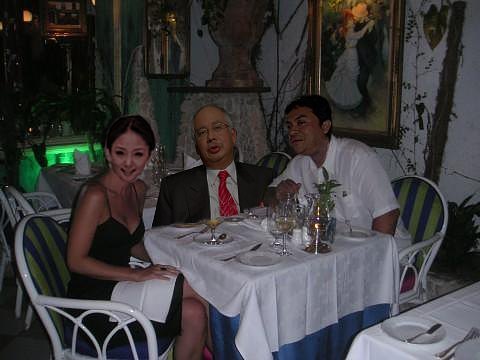
Let's see another example from youtube on how Reuters manipulate the news photos.
Walsh (2006, p.29) opines that audience are inclining towards favouring text that has features of multimodality, the use of photos to increase a story’s effectiveness and quality are on a rise. Yes, we all agreed that with the integration of text and photos would spices up the quality of conveying effective message, but my question is 'How true is the photo you see?' When a news photo is being edited, it will never be a truth of a news event.
Besides that, (Lester 1999) also opines that by not maintaining credibility as a photographer will 'diminish journalistic impact and self-respect, and the importance of photography as communication'. It is essential to preserved a genuine photograph took from a news event to remain untouch because readers no longer rely solely on written text for comprehension; they absorb and process all that they see within a document to create meaning for themselves. (Harrison 2003)
An old saying that 'Picture Speaks A Thousand Words'. It is not created and being said for years for nothing, let's not ignore the originality of this famous quote as well as the originality of a photo.
References
Harrison, C, 2003, Volume 50, Number 1, 'Visual Social Semiotics: Understanding How Still Images Make Meaning, Technical Communication, pp 46- 60.
Walsh, M 2006, 'Textual shift: examining the reading process with print, visual and multimodal texts', in Australian Journal of Language and Literacy, vol. 29, no. 1, pp. 24 - 37.
Funnell, A 2007, 'The Power of the Photograph', The Media Report, access 2 June 2009, < http://www.abc.net.au/rn/mediareport/stories/2007/2051819.htm>
John. Long 2005, Photo Manipulation, access 2 June 2009,
<http://www.nataliafletcher.com/photo/sources.htm>
Dartmouth 2009, Photo Tampering Throughout History, access 2 June 2009, < http://www.cs.dartmouth.edu/farid/research/digitaltampering/>
Lester, PM 1999, Picture Manipulations, access 2 June 2009,
<http://commfaculty.fullerton.edu/lester/writings/chapter6.html>
- Adopted by the NPPA Board of Directors in NPPA Statement of Principle
According to John, Long (1999) journalist have only one thing to the public and that is credibility. There is a relationship established between the author (news provider) and the recipient (news viewer) that is based on truth and integrity; any manipulation (that is recognizable) could damper, undermine or even break that relationship.
Yet there have been many manipulated photograph circulated in the media world as early as the 1860s, only a few decades after Niepce created the first photograph in 1814. Dartmouth (2009) One example is the portrait of U.S. President Abraham Lincoln published in 1860, it was actually a composite of Lincoln's head and the Southern politician John Calhoun's body.
In Malaysia context, the picture of threesome dinner between Altantuya, Najib and Razak Baginda that circulated within while Malaysia is believed to have edited using photoshop. Though it is obviously fake, this photograph will somehow cause a political unrest. One of our Malaysian politician Tian Chua - has published this picture in his blog in order to propagates his political view.
Let's see another example from youtube on how Reuters manipulate the news photos.
Walsh (2006, p.29) opines that audience are inclining towards favouring text that has features of multimodality, the use of photos to increase a story’s effectiveness and quality are on a rise. Yes, we all agreed that with the integration of text and photos would spices up the quality of conveying effective message, but my question is 'How true is the photo you see?' When a news photo is being edited, it will never be a truth of a news event.
Besides that, (Lester 1999) also opines that by not maintaining credibility as a photographer will 'diminish journalistic impact and self-respect, and the importance of photography as communication'. It is essential to preserved a genuine photograph took from a news event to remain untouch because readers no longer rely solely on written text for comprehension; they absorb and process all that they see within a document to create meaning for themselves. (Harrison 2003)
An old saying that 'Picture Speaks A Thousand Words'. It is not created and being said for years for nothing, let's not ignore the originality of this famous quote as well as the originality of a photo.
References
Harrison, C, 2003, Volume 50, Number 1, 'Visual Social Semiotics: Understanding How Still Images Make Meaning, Technical Communication, pp 46- 60.
Walsh, M 2006, 'Textual shift: examining the reading process with print, visual and multimodal texts', in Australian Journal of Language and Literacy, vol. 29, no. 1, pp. 24 - 37.
Funnell, A 2007, 'The Power of the Photograph', The Media Report, access 2 June 2009,
<http://www.nataliafletcher.com/photo/sources.htm>
Lester, PM 1999, Picture Manipulations, access 2 June 2009,
<http://commfaculty.fullerton.edu/lester/writings/chapter6.html>
Wednesday, June 3, 2009
.: New Forms of Media Publishing :.

When asked what is the newest form of media publishing? I say, Youtube a type of vlog would be the best answer. Walsh (2006) opines that a textual shift is taking place from the monomodal to the multimodal that includes different modes of communication such as prose, graphics, video and audio. This explained the emergence of media publishing from black and white text to video with multicolor graphics.
Youtube is a medium which the public can upload and share video using MPEG-4 format anytime, anywhere. And the best part is, it is free. Therefore, it is not surprising if you see video containing defamation, pornography and violation elements. Unethical users voilates the means of Youtube has alaways been an issue surrounding the media field. For instance, a recent recording aired by Al-jazeera that Osama Bin Laden are using vlog to spread terrorist propaganda. It was then spread widely on Youtube.
Osama Bin Laden Calls for Jihad to Against Israel aired on Youtube
Apart from that, Youtube actually is an useful tool. Remember Susan Boyle, the 47 years old lady with a beautiful voice from 'Britain's Got Talent"? She vowed the judges in that reality tv shows and became famous. When it was uploaded Youtube, immediately the astonishing Susan Boyle hits the Youtube 'most viewed' at about 67,812,149 viewers. Having that said, Youtube at this point has perform a good example as it enables us to share what's happening around the world nevertheless see what we have missed in other medium - Television.
Here is the video of Susan Boyle on Youtube
http://www.youtube.com/watch?v=9lp0IWv8QZY
Reference
Walsh, M 2006, 'Textual shift: examining the reading process with print, visual and multimodal texts', in Australian Journal of Language and Literacy, vol. 29, no.1, pp. 24 - 37.
Monday, June 1, 2009
Classification of Blogs & Ways to Building Blogging Communities
Classification of Blogs
Blogs in general can range from any field depending on the topic is being discussed. Different blog has different target audience. The examples are categorized as below.
By subject:
1. Fashion - tictactoe28
2. Food - chicksandpea

(Source: Chickandpea.com)
4. Law - abovethelaw
5. Travel - vkeong
6. Sport - sport-law
By device:
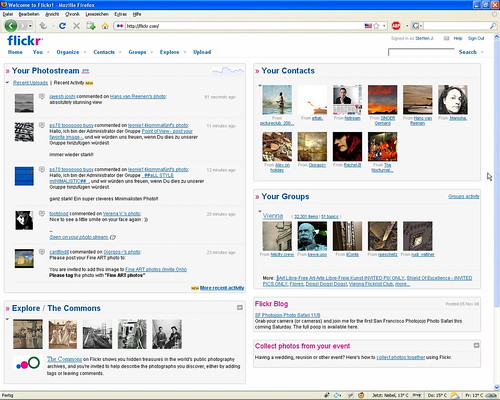
- Moblog (Mobile phone blogging) - Flickr
(Source: Lowyat.com)
By media type:
1. Vlog (Video blogs) - YouTube
2. Linklog (Collection of links or URLs) - Shoppingreviewbyand
3. Splog (Spam blogs) - The Panic Blog
4. Sketchlog (Collection of sketches/graphics) - Deviantart
5. Tumblelog (Blogs with mixed-media) - Tumblr
6. Photolog (Collection of photos) - Photobucket
7. Podcast (Collection of audio recordings in MP3 format) - Imeem
8. Liveblog (Blogs that cover live events) - Engadget
By status of publishers:
1. Business blog - Blogbusinessworld
2. Corporate blogs - Redfin Corporate Blog
Australian author and media analyst, Margaret Simons classified blogs into 9 categories. Funnell and Davies (2008)
- Pamphleteering blogs
- Digest blogs
- Advocacy blogs
- Popular Mechanics blogs
- Exhibition blogs
- Gatewater blogs
- Diary
- Advertisement
- News blogs
- Personal blogs
- Corporate blogs
- by Media Type
- by Device
- by Genre
Blogging Communities
Blogging communities are formed through common interest, they are a group of social supporter to each who shared links, tags, photos, video and even exchange ideas and comments. For instance, Malaysia's largest youth opinion community - Youthsays.com is a form of blogging communities, their main audience are of course no other than the youth.
According to Kirkpatrick (2006), it is a social networking system where bloggers and their readers are able to connect and and interact with each other based on interests and personal similarities. To create a blogging community, create a blog of our own then use tools like permalink, tags and comments to link to other blog. The engagement is what it counts when 'joining' a blogging community.
References
Funnell, A & Davies, A 2008, A taxanomy of blogs, The Media Report, access on 30 May 2009, <http://www.abc.net.au/rn/mediareport/stories/2008/2372882.htm#transcript>
Kirkpatrick, M 2006, MyBlogLog: Readers Network Around Their Favorite Blogs, TechCrunch access on 31 May 2009,
<http://www.techcrunch.com/2006/10/19/mybloglog-readers-network-around-their-favorite-blogs/>
Wikipedia 2009, Blog, access on 30 May 2009,
<http://en.wikipedia.org/wiki/Blog>
Friday, May 29, 2009
Blogs as Current Phenomenon and Benefits to the Community
Technorati is a platform known widely for its state of blogosphere reports, analyzing the trends of blogs and blogging since year 2004. According to Technorati.com, size of current blogosphere is ever expanding and doubles in size every 6 months. About 175, 000 new weblogs being created worldwide each day.
Here is a look at the daily posting volume in data that Technorati tracks

Blogs are known as 'citizen media' (Technorati 2008). Unlike those days, people turn to dairies to express their words. Nowadays with the emergence of technology, where computer is a 'resource' to accessible everywhere, people uses blog to voice out their opinion freely without any constrain. Blogs are easy to create, we can even personalise and design our blogs according to our own preference. One of the attraction is that the information is shared and distributed nationwide with just a click on the mouse.
There are many types of blogs such as personal blogs, collaborative blogs, corporate blogs, topical blogs, spam blogs (splogs), podcasts and videocasts, and photologs (Blogging-The Phenomenon). Personal blogs and corporate blogs seem prevalent in Europe, Asia and Malaysia. In Nevillehobson.com, Reuters reported that 37 percent of US bloggers cited their life and experiences as their primary topic, while politics and government came in second at 11 percent. Same goes to Asia and Malaysia as stated in Microsoft.com, the blogging trends in Asia and Malaysia are mostly about politics and social blogging such as personal blog, entertainment, technology and even food blogs. People create blogs to discuss about political view as well as to update their friends and family about their personal life.
Malaysia is a country where information flow are bounded by rules, strictly controlled by government. Therefore, blogs become the only hope for 'info diggers' to reveal lies hidden underneath each piece of information. It is beneficial because the genuity of information disseminate by print media could be rectify and bring to discuss. Nowadays, reader do not just observed and believe in everything the media reports. In facts, they are smarter now to turn to blogs for a better picture. For instance, one of Malaysia famous political blogger Jeff Ooi, benefit readers with information that media might has 'overlooked'.
Advertiser and bloggers also act as a mutual benefit companion earning through blogs. Blog advertising market leader such as Nuffnangs reward bloggers with money when they advertise on their blogs, an interesting tag stated 'I served nuffnangs' will appear on the bloggers' blog. Malaysia famous blogger such as Lingo from cheeserland.com have followers who constantly get updates from reading their blogs, thats when advertiser get their new product publicise.
References
Blogging, The Phenomenon, Types of Blogs 2006, access on 29 May 2009,
Press Microsoft Malaysia 2006, Women rule in Malaysian blogosphere, access on 28 May 2009, <http://www.microsoft.com/malaysia/press/archive2006/linkpage4337.mspx>
Hobson, N 2006, Latest blog trends from Pew Internet, access on 29 May 2009, <
Monday, April 13, 2009
Good Document Design and Good Writing
A good document design helps reader to understand the context and visual easily in ways that serve their interest and needs. Schriver (1997) states that a good document design should incorporate both text and image to convey effective message to the reader.
During a presentation, audience engagement or participation can determines their understanding and accessible to the presented information. By imagining how readers access information, switching in between the roles of a presenter and audience can answer whether a document design is good or bad. (Putnis & Petelin 1999)
Lets see an example as below :-

 Slide 1 : Integration of text and visual
My analysis : These are 2 examples i took from my first assignment presentation slides. During my presentation, I found out that my audience are more likely to engage in slide (1) rather than slide (2), therefore the combination of text and visual are more effective in communicating with audience as they tend to pay more attention to slide (1) which proves what Schriver (1997) has explained earlier is correct.
Rothman (2008) opines that a good writing involves relaying specific information directly and literally. It should be interactive with its audience providing with relavant information. There should be no symbolic or associative interpretations. It is written for a direct and specified purpose that should remain unchanged and conveyed without information loss, regardless of its audience. How readers access information from website can explain why a good writing must be direct. According to Nielsen (1997), readers scan the page, picking out individual words and sentences rather than reading web pages word by word.
Therefore, simple, direct and accurate words are essential elements in good writing.
References
Kress, G. & van Leeuwen, T. 2006. Reading images. Chapter 6: The meaning of composition
Putnis, Peter & Petelin, Roslyn 1999, Professional communication, 2nd edn, Prentice Hall Australia Pty Ltd, Australia.
Schriver K.A 1997, Dynamics in Document Design: Creating Texts for Readers, Wiley Computer Pub., New York.
Reep, DC 1997, Technical writing: principles, strategies, and readings, Allyn and Bacon, Boston.
Jacob Nielsen's Alertbox, Reading on the Web, access on 11 April 2009, <http://www.useit.com/alertbox/9710a.html>
<http://www.associatedcontent.com/article/9447/what_makes_good_scientific_and_technical.html?cat=4>
Saturday, April 11, 2009
.: Purpose of Weblog :.
We are in the midst of change, so are the current media publishing and design issues. Therefore, this blog acts as an essential tool to communicate, improve and review about the current media publishing and design issues by applying theories relates to forms, function, context and other relevant thoeries.
Target audience: Communicators who concerns about current media and publishing issues.
Subscribe to:
Posts (Atom)